TROUBLESHOOTING
With over 20 years’ experience with EDI, CEDITS Ltd can offer a full range of Technical Support Services. This includes Troubleshooting, System Design and Optimisation, Commissioning and training.
The feed water specifications published by EDI Manufacturers minimise the risk of physical and chemical damage. Many of the symptoms displayed by EDI modules are indicative of the cause of poor performance or failure. With experience, these symptoms can be used to diagnose the problem, and to suggest a quick and effective remedy.
There are no ‘moving parts’ in an EDI module and, with the latest production techniques and quality control, manufacturing defects are rare. Consequently the vast majority of problems associated with EDI essentially fall into two categories’; system design, or feed water quality.
Poor system design can lead to mechanical damage and tend to be pressure related issues, (water hammer, dead-ending, etc), or temperature issues, (overheating, power on / with low or no flow).
Poor pretreatment design can lead to scaling or fouling of the ion exchange resin and membranes. For instance an RO permeate rinse, (or lack of one), can give a poor permeate for the first few minutes of operation which will, at best give an additional ionic load to the EDI module, or at worst cause fouling and/or scaling.
All Manufacturers of EDI modules state feed water specifications. Adherence to the stated values is crucial for the performance and longevity of EDI modules.
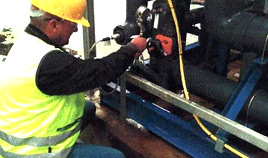
Cleaning
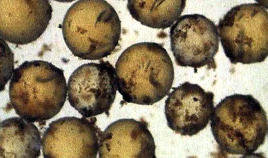
Cleaning recommendations rely on the interpretation of the symptoms displayed by the module. These symptoms differ depending on the nature of the foulant. If organic fouling, scaling, or biofouling are identified there are chemicals and procedures that can be used to clean the resin and membranes. Needless to say, it is critical to get the system on-line as soon as possible, but it is equally important to ensure the correct and most effective cleaning procedure is used.
CommisSioning
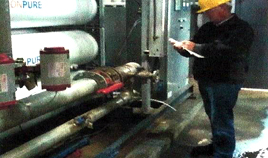
CEDITS Ltd has World-wide experience of EDI system commissioning for systems operating from 0.5 to 500 m3/hr. Commissioning can also be linked to a comprehensive on-site training program designed to take Engineers through the design, commissioning and optimisation stages.
|
.png)